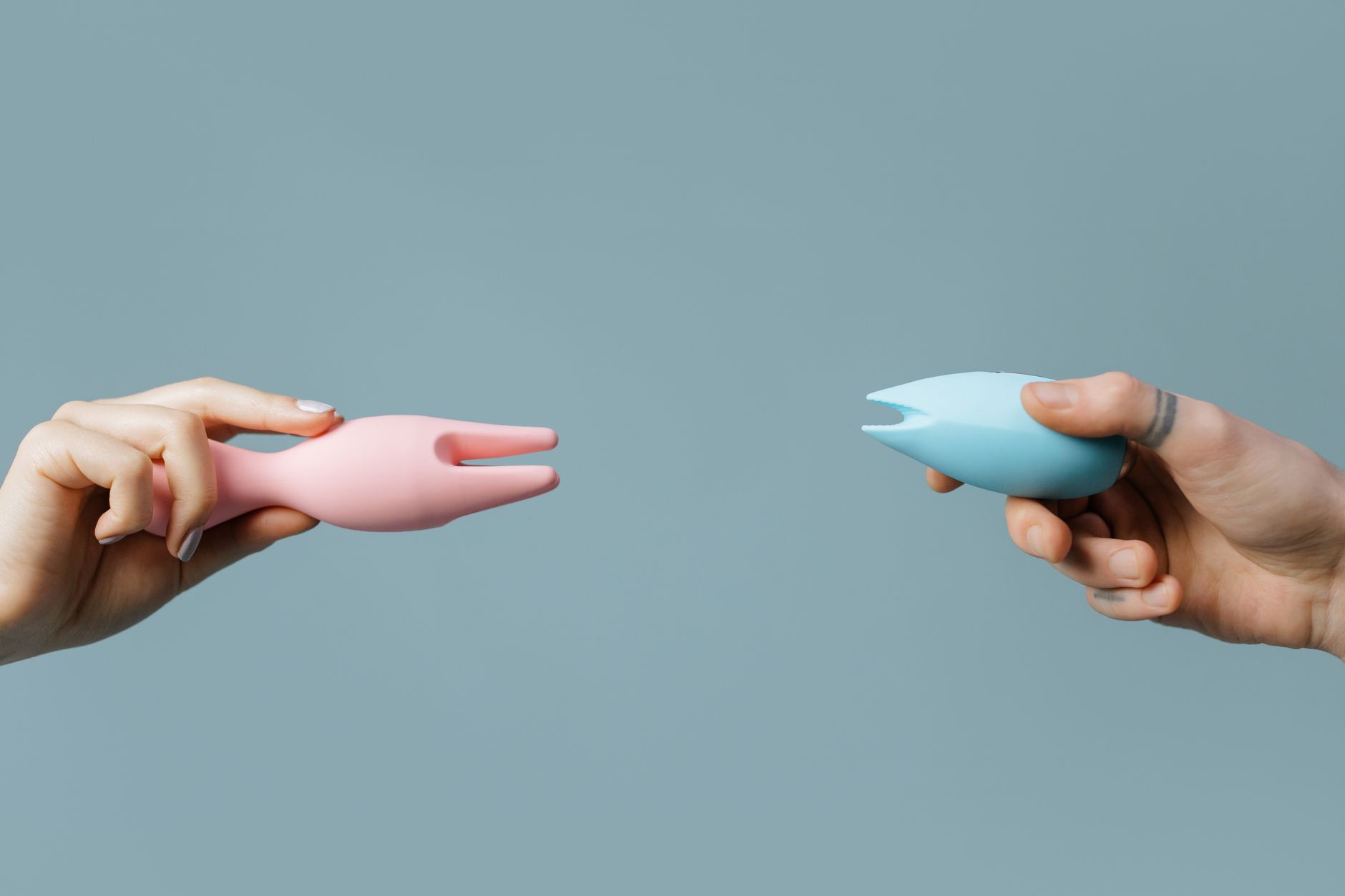
The worry is legitimate. So is the solution.
Honestly, if you're nervous about trying a new toy like a lemon clitoral vibrator, that nervousness makes complete sense. You're about to introduce something unfamiliar into an experience that's already deeply personal. That's real vulnerability, and your brain is rightfully flagging it as "pay attention here."
The thing about anxiety around pleasure tools is that it often isn't about the toy itself. It's about control. It's about knowing what to expect. It's about not feeling weird or broken if the experience doesn't match what you imagined. And that's all solvable.
Why anxiety shows up around new toys
Let's separate the different flavors of worry that tend to surface:
"What if I don't like it?" This is a money concern dressed up as a pleasure concern. You've invested, and if it doesn't work, you've wasted it. Real, fair.
"What if I can't make it work?" This one lives at the intersection of performance anxiety and shame. You think orgasms should be straightforward, and the fact that they're not feels like a personal failure. It isn't.
"What if my partner thinks I'm weird?" This is a trust question, not a toy question. If you're anxious your partner will judge you for wanting pleasure, that's a conversation that needs to happen before the vibrator enters the room.
"What if it's too intense?" This is the most practical worry, and it's also the easiest to solve. Lemon vibrators, including the classic lem design, come with multiple intensity settings. You control the entire experience.
"What if I feel self-conscious?" Totally fair. Solo exploration around a new tool can feel awkward at first. But awkwardness and anxiety are different. One fades with repetition. The other doesn't, and that's the signal to pause and figure out what's actually bothering you.
Start with zero expectations
The single most useful thing I tell clients is this: your first time with a new toy should have absolutely nothing to do with achieving orgasm.
I mean it. Wipe that goal entirely. You're not testing whether the lemon clitoral vibrator "works." You're getting to know an object. That's it. That's the whole job.
Set aside maybe 15 minutes. No partner watching, no pressure, no agenda. Take the toy out. Hold it. Look at it. Turn it on (on the lowest setting). See what it feels like in your hand. Does the weight feel good? Does the noise bother you? Does the vibration pattern feel pleasant on your palm, before you ever bring it near your body?
This is boring on purpose. Boredom is the antidote to anxiety because it removes the stakes.

Photo by Ihsan Adityawarman on Pexels
The pacing framework that actually works
Once you've handled the toy and you're not actively dreading it, here's the progression I recommend:
Session 1: Hold it against clothed body. Just the outside of your thigh. Your hip. Somewhere low-stakes. Turn it to setting 1. Does it feel good? Too much? Just right? You're gathering data, not chasing sensation.
Session 2: Try it over underwear. Still fully clothed on top, but now you're getting a sense of how the vibration travels through fabric. Notice what happens to your arousal. Notice what doesn't happen. Both are information.
Session 3: Direct skin contact, low intensity. Now you're in private space, probably lying down, and the toy is touching skin. Still setting 1 or 2. The goal is still familiarity, not orgasm. Some people feel nothing the first time. Some feel everything. Both are normal.
Session 4+: Play with settings and pressure. By now the object isn't mysterious. You know how it feels. You can experiment with angle, speed, and how close you bring it to your most sensitive areas.
This progression usually takes two to four weeks. I know that sounds glacially slow if you're used to things happening faster. But here's why it matters: your nervous system gets to catch up. Your brain stops treating the toy as a threat and starts treating it as a tool. Anxiety naturally dissolves because there's nothing left to be anxious about. You've already done it, and you're fine.
The internal conversation that matters
While you're moving through this pacing framework, there's probably a running commentary in your head. "Is this working? Should I feel more? Am I doing it wrong? This is taking too long. Why isn't this better than my fingers?"
Listen to that commentary, but don't believe it's the truth. It's just anxiety talking.
Here's what I'd replace it with: "I'm learning how my body responds to this toy. Every session teaches me something. This is the practice. This is the point."
That frame shift is massive. You're not failing at pleasure. You're succeeding at exploration. You're building the muscle of paying attention to what feels good instead of demanding immediate results.
A lot of people find that after three or four sessions, something clicks. The toy stops feeling foreign. Your body stops bracing. And then, often for the first time, you actually feel the pleasure it's capable of delivering.
If you have a partner
If you're bringing a lemon clitoral vibrator into partnered sex and you're already anxious, here's the conversation to have first, in regular clothes, not in bed:
"I want to try something new, but I'm nervous about it. Not about you. Just... about the unknown. Here's what would help: [longer warm-up time / us going slowly / you checking in with me / you just focusing on me for a while / whatever you actually need]."
That takes all the guesswork out for your partner and removes the scenario where they're trying to figure out your vibe while you're busy managing your own anxiety.
Your first partnered experience with the toy doesn't need to be about deep penetration or complicated choreography. It could just be your partner watching you use it. It could be them holding it while you guide their hand. It could be them stimulating you in other ways while you use it on yourself. The specifics matter less than the fact that you're building trust and comfort together.
The physical tension that comes with anxiety
One thing that often surprises people: anxiety literally makes pleasure harder. Your pelvic floor tenses. Your breathing gets shallower. Your body is in a low-level "protect myself" mode. And that's the exact opposite of the relaxation most people need to really feel a vibrator.
So between sessions, or even before a solo exploration session, do this: lie down, and deliberately relax your pelvic floor. Breathe in for four counts, out for four counts, for maybe five minutes. There are excellent free pelvic floor relaxation guides online if this feels unfamiliar.
You're basically telling your body: "We're safe. You don't need to clench right now." After a few tries, it becomes automatic.
If you're usually anxious about pleasure, you might also notice this relaxation time helps you enjoy fingering, partner stimulation, or anything else. It's a life skill, not just a toy skill.
When to call it and pivot
Let's say you've done four or five sessions, you've moved through the progression, and you still feel fundamentally uncomfortable. Not "this doesn't work for me" uncomfortable, but "I actually don't want to do this" uncomfortable.
Stopping is totally fine. Not every tool works for every person, and that's not a referendum on you.
But I'd gently suggest: check whether the discomfort is about the toy itself, or whether it's about the underlying anxiety. If it's the latter, there might be something deeper worth exploring with a therapist or sex educator. Sometimes toys bring up old shame, old trauma, or messages you absorbed about your own pleasure not being a priority.
That's real work. The toy just shined a light on it. And that's actually valuable information.
People also ask
Is it normal to feel nothing the first time I use a lemon vibrator?
Completely normal. A lot of people report feeling mostly numb or overwhelmed sensation without much pleasure the first few times. Your body is processing a new input. The pleasure usually deepens as your system gets familiar with the sensation and stops treating it as a threat. If it's still not working after five or six sessions, you might experiment with different pressure, angles, or settings. And honestly, some bodies just prefer other types of stimulation. That's not a failure. That's just useful data.
Can I use my lemon clitoral vibrator with a partner if I'm still anxious about it?
Yes, but talk about it first. Let your partner know you're nervous and what would actually help you feel safer. Some people find that having their partner involved from the start reduces anxiety because there's less to hide. Others find it adds pressure. You know which you are. Plan accordingly.
What if I'm worried the vibrator will be too strong?
Most lemon vibrators come with multiple intensity levels. Start on level 1. Seriously. It's weaker than you think. You can always turn it up. You can't turn down sensation that's already happened, so it's always better to start subtle and build.
How long should I give a lemon vibrator before I decide it's not for me?
I recommend at least four to six solo sessions before you make that call. That's usually enough time for initial novelty to wear off and for your body to actually process the sensation. Some people find their "thing" by session three. Some take longer. If it's still not clicking after six sessions, it might genuinely not be your tool, and that's okay.
Should I feel guilty for being anxious about trying new things?
No. Anxiety is a normal protective mechanism. Your brain is doing its job. The goal isn't to feel guilt about being anxious. It's to understand what's driving the anxiety and address that part. Most of the time, it's about control or shame, and those are solvable.
What if I'm anxious because I'm worried it will be weird with my partner?
That's a relationship question, not a toy question. If you're with someone who would judge you for wanting pleasure, that's worth examining. A good partner wants you to feel good. A great partner actively helps create the space for that. If you're getting pushback, that's information about the relationship, not about your desires.
You're not broken. You're just beginning.
Anxiety around new pleasure tools usually isn't about the tool. It's about permission. It's about whether you believe your pleasure matters enough to spend time on. It's about whether you trust yourself and your partner enough to be vulnerable.
All of that is learned. None of it is permanent.
Start small. Move slowly. Build familiarity. Trust that your body knows how to feel pleasure once it's given the safety and space to do so. And remember: every single person who uses a lemon clitoral vibrator or any pleasure tool was nervous the first time. The difference between the people who find it amazing and the people who don't isn't talent or magic. It's just that they decided their pleasure was worth the awkward beginning.
If you'd like to talk through your specific concerns or explore how anxiety might be showing up in other areas of your pleasure life, reach out to us at My Lemon Sucker. We're here to help.